
Reykjanes has all kinds of interesting museums that have a deep connection to the area.
Most of them are pretty standard but others are dedicated to more abstract things, such as Vikings, Rock ´n roll, nature, and other curious phenomena.

Reykjanes Public Library
The Reykjanesbær library is the cultural centre of the town. Its aim is to provide its residents with access to a diverse collection and information through various formats. The library aims to support the growth of cultural and scientific development of the community as well as education, lifelong learning, employment, Icelandic language, reading for pleasure and information literacy. The library aims to create a “third place” in addition to the home, work and school. Every child under eighteen receives a free library card.
The library staff organizes many different events such as the book club, creative workshops focused on various handicrafts, and cosy social events for families with young children featuring the reading of children’s books. The group Women of the World meets once a month and women from all over the world meet up for a good chat. At the library, the staff’s goal is to create a gateway into the community like an oasis in the desert where everyone should find something to suit them.
The library's branch is Stapasafn, located at Dalsbraut 11, 260 Reykjanesbær.
View
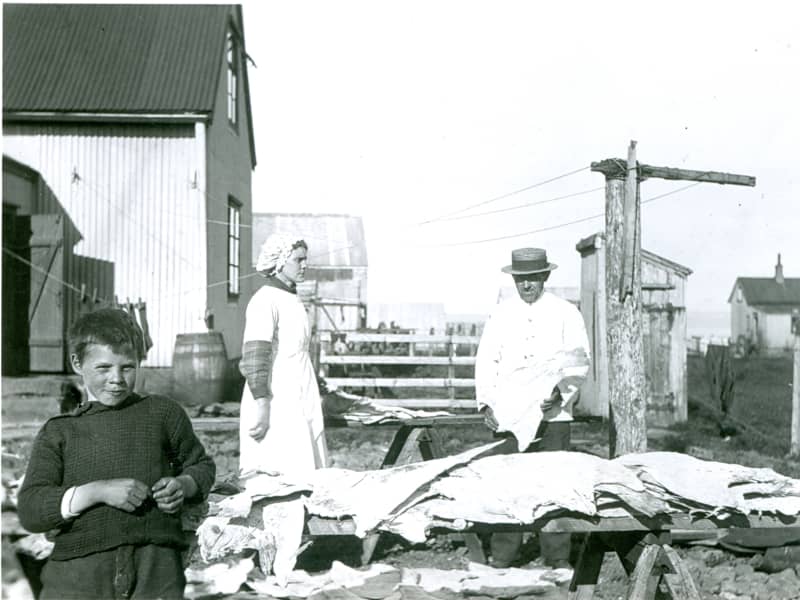
Reykjanes Museum of Heritage
Reykjanesbær Heritage Museum - Where the past is reflected in the present
Reykjanesbær Heritage Museum offers visitors the opportunity to explore the local history and find out what makes this area unique. The exhibitions look at influential factors on life and the environment through a modern-day perspective.
Reykjanesbær Heritage Museum is located in the historical Harbor House, Duusgata 2-8 in Reykjanesbær. Opening hours: Closed Mondays - open 12:00-17:00 tuesday till sunday.
Lokað er á mánudögum. Opið er þriðjudaga tl sunnudaga frá kl: 12:00-17:00.
Current exhibitions:
Trash or Treasure?
In the late 20th century and the early 21st, merchandising became common in the promotion of businesses, organisations and causes. This is an opportunity to take a walk down memory lane and reflect upon how graphics and logos have changed through time.
Countenance
The museum has a large collection of photographs that have arrived in their original frame. Photographs that are selected to be framed and displayed usually have a special value in the eyes of the owner. Fondness, pride, and longing are among the emotions that are expressed in this way.
To sew a fine seam
Sewing used to be a task for women in the home and considered a fine craft. The invention of the sewing machine was a revolution at the time. It was said that having a sewing machine was equal to one maid. Some women became known for their craftsmanship and the sewing machine made it possible for them to earn their own living.
Stekkjarkot, Innri-Njarðvík
Stekkjarkot is a reconstructed turf house, typical for the many cottages that were inhabited by fishermen and their families in the area in the 19th Century. Stekkjarkot was on rented land and the inhabitants had to rely on fishing as they were prohibited to keep livestock. The original Stekkjarkot was in use 1885-1887 and again in 1917-1923.
Stekkjarkot is open by appointment only.
View
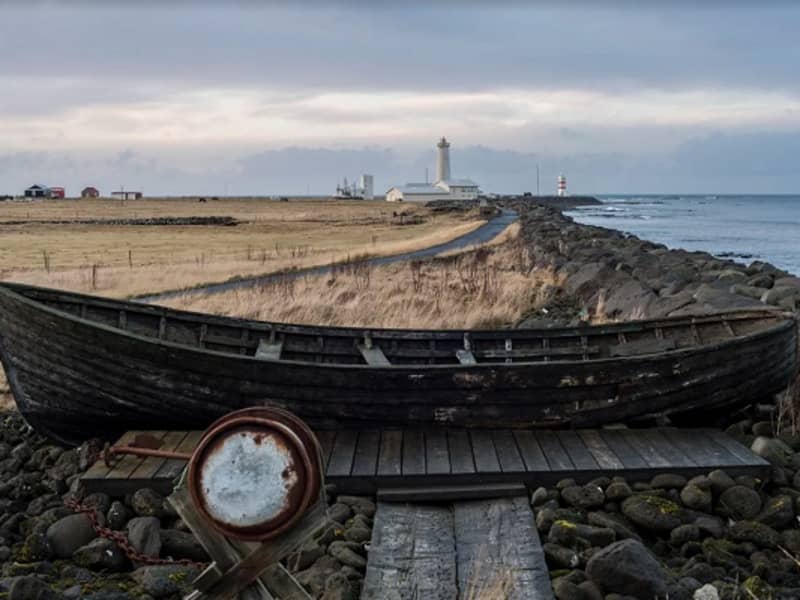
Folk Museum in Garður
The municipal museum in Garðskagi is located in a natural paradise, which blends the beauty of the landscape with its rich animal and birdlife.
The museum was first opened in November 1995 in the old processing houses in Garður. The museum has both a Folk and Maritime Museum. It has an outstanding engine collection of Guðni Ingimundarson. There are over 60 engines on display and almost every one of them is functional. Many important items from the municipal history of Garður are located in the museum, items which were essential for the livelihood on both land and sea The Museum is a great point of interest for visitors as it tells the story of how fishing developed and the history of the people who lived and worked in the community. A restaurant and camping site with facilities is on-site and if you are lucky you might see dolphins and whales near the shore from the terrace of the restaurant.
Summer opening is 10-17 From the 1st May - 30. Sept.
From October the Museum can be booked for groups.
View
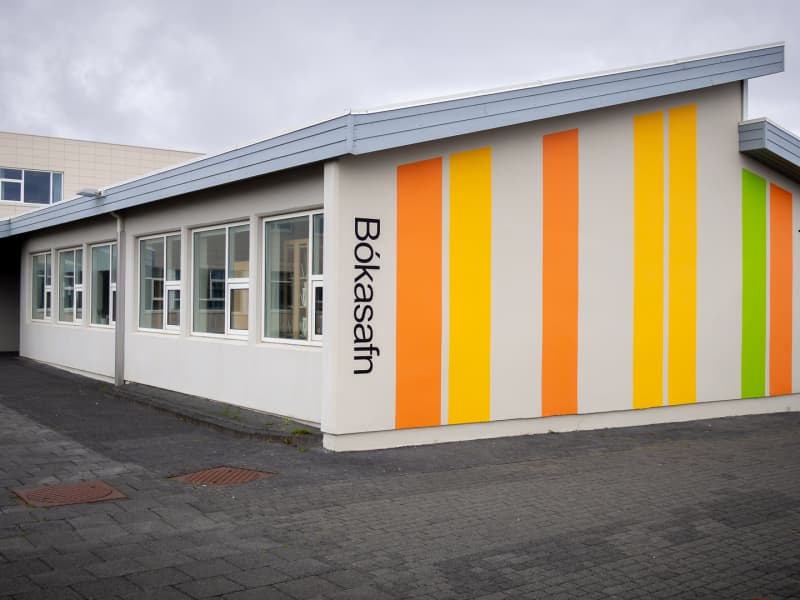
Public library Suðurnesjabær
The Public library in Suðurnesjabær is located nex to the swimming pool in Sandgerði.
View

Sudurnes Science and Learning Center
If you are interested in the Icelandic nature and wildlife, sea creatures, research related to the area and art, the Sudurnes Science and Learning Center is a place you must visit!
The center offers three exciting exhibitions. They include a nature gallery where you can look at and touch various stuffed animals from the Icelandic wildlife and see live sea creatures. There is also a collection of shells and whale bones in addition to the only stuffed walrus in Iceland.
In the historical gallery you can visit the magnificent exhibition Attraction of the Poles on the life of the French medical doctor and polar scientist Jean-Baptiste Charcot. A model of his research ship, Pourquoi-Pas?, that perished off the coast of Iceland in 1936 is part of the exhibition.
In the art gallery you will find the art and educational exhibition Hidden World of the Seaweed Fairies. The exhibition weaves scientific knowledge about the ocean into the magical world of the seaweed fairies.
Sudurnes Science and Learning Center is an ideal place to visit for families and others hungry for knowledge. Join our treasure hunt that will take you on an exciting journey looking for various animals, plants and historical places. Bring your findings back to the Center for further research.
Opening hours
Summer (May 1st – August 31st)
Monday – Friday: 10:00 to 16:00 Saturday and Sunday: 13:00 to 17:00
Winter (September 1st – April 30th)
Exhibitions closed.
Flexible opening hours for groups (minimum 20 persons) year-round – please call 423-7555.
For further information see their website.
View
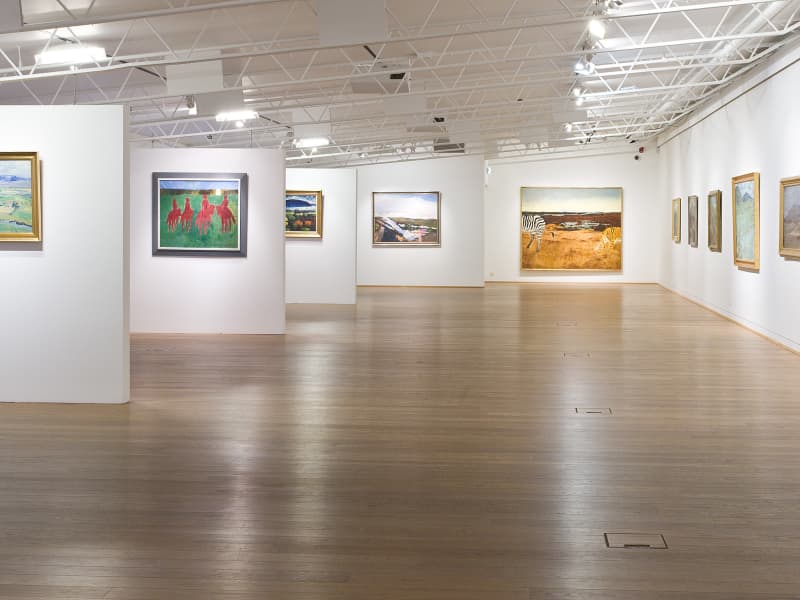
Reykjanes Art Museum
Reykjanes Art Museum presents several new art exhibitions every year. The museum is located in Duus Museum, the Art and Cultural Center of Reykjanesbær along with Reykjanes Maritime Center and Reykjanes Heritage Museum.
Reykjanes Art Museum presents visual arts through diverse exhibitions, lectures, guidance, publications and their website https://www.lrnb.is
The museum is open everyday from 12pm – 5pm.
View
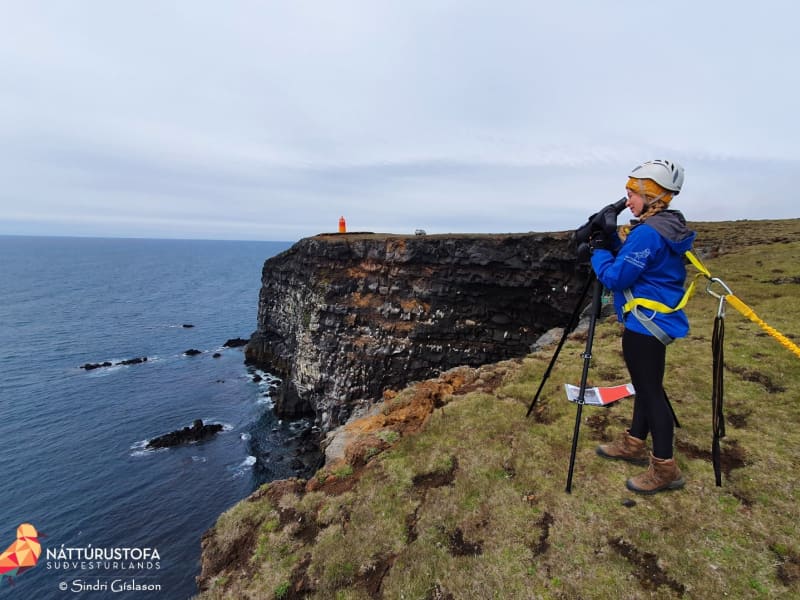
Southwest Iceland Nature Research Centre
Southwest Iceland Nature Research Centre is a regional institute of natural research and is based in Sandgerði. It was established in the year 2000 and is one of eight regional Nature Centres in Iceland.
The institutes main focus is on ecology of marine invertebrates, exotic species in Icelandic waters, avian studies, and shoreline monitoring. The centre is also involved in various teaching programs for all educational levels.
Southwest Iceland Nature Research Centre shares research facilities and housing with The Sudurnes Science and Learning Center and The University of Iceland‘s Research Centre in Sudurnes and are many of the researches done in collaboration between the institutes.
View

Reykjanes Museum of Heritage - Stekkjarkot
Stekkjarkot is a classic example of the roughly built turf, stone and timber cottage-type houses once common on the Reykjanes peninsula and other coastal areas of Iceland, Stekkjarkot was opened to the public in 1993 by Iceland’s then-president Vigdís Finnbogadóttir, following a year of restorations.
The older part of the cottage, with its open hearth, dates back to the 19th century, and is said to have been home to a maidservant with an infant daughter who slept on the earthen floor. The newer part dates from the farm’s last days of habitation, by which time floorboards covered the living room and kitchen, a coal-fired stove provided both cooking facilities and heat, and conditions for those who lived there do not seem to have been too bad.
Stekkjarkot is open on request and there is free admission.
Please contact byggdasafn@reykjanesbaer.is for further information.
View
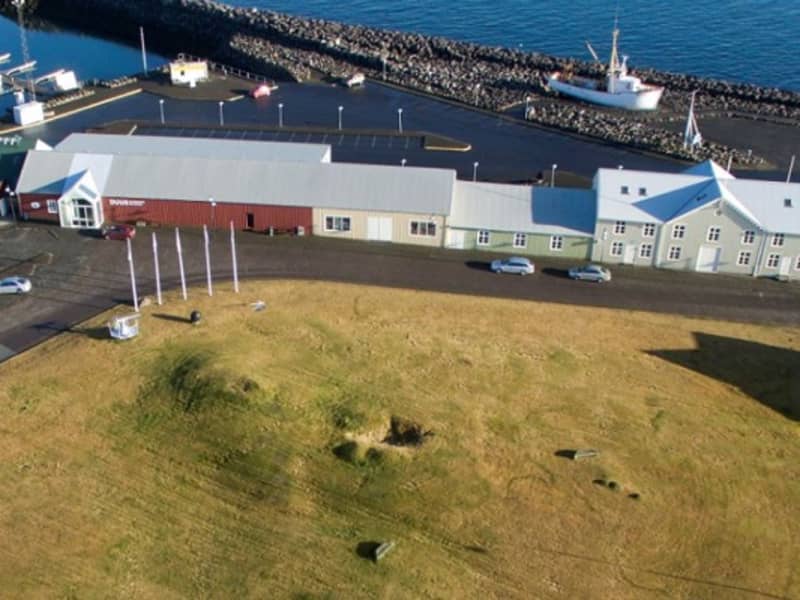
Duus Museum - Cultural Center
Duus Museum is the Art and Cultural Center of Reykjanesbær where you can experience diverse exhibitions and cultural activities all year round. The museum houses exhibition halls for the Art Museum of Reykjanesbær and Heritage Museum of Reykjanesbær which offer new and exciting exhibitions throughout the year. Reykjanes Geopark Visitor Center are also located in the museum.
Closed Mondays - open 12:00-17:00 tuesday to sunday.
View
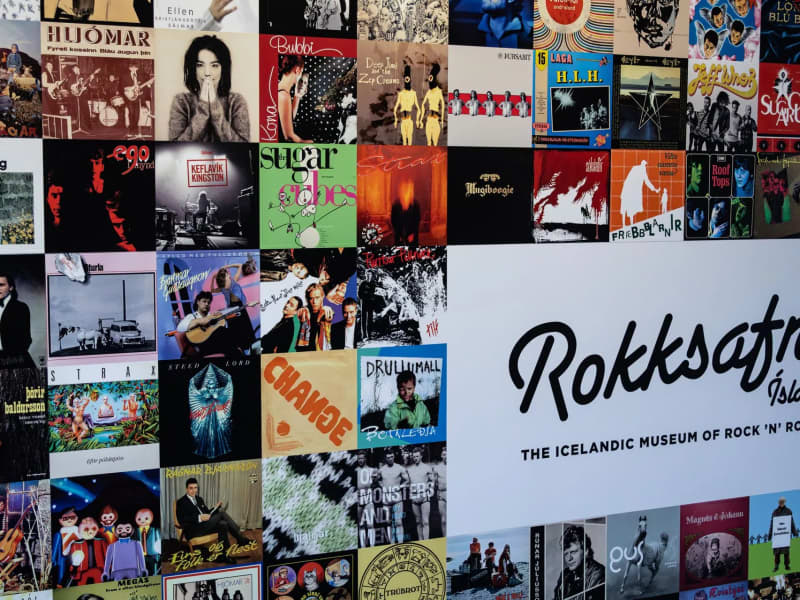
The Icelandic Museum of Rock ´n´ Roll
The Icelandic Museum of Rock ‘n’ Roll is an exhibition dedicated to the history of pop and rock music in Iceland. The museum is located at Hljómahöll in Keflavik, only a 5-minute drive away from Keflavik International airport. The exhibition features a timeline tracing the history of Icelandic music from 1920 to the present day.
Among the many items on display are Gunnar Jökull Hákonarson’s drum kit, which was used on Trúbrot’s acclaimed album Lifun; a dress worn by Emilíana Torrini in the music video for Jungle Drum; a wooden sculpture of the reggae band Hjálmar; marching band jackets worn by Stuðmenn in the film Með allt á hreinu; a dress belonging to Elly Vilhjálms; a statue of Rúnar Júlíusson; a grand piano formerly owned by Raggi Bjarna; and many more fascinating pieces from Icelandic music history.
View
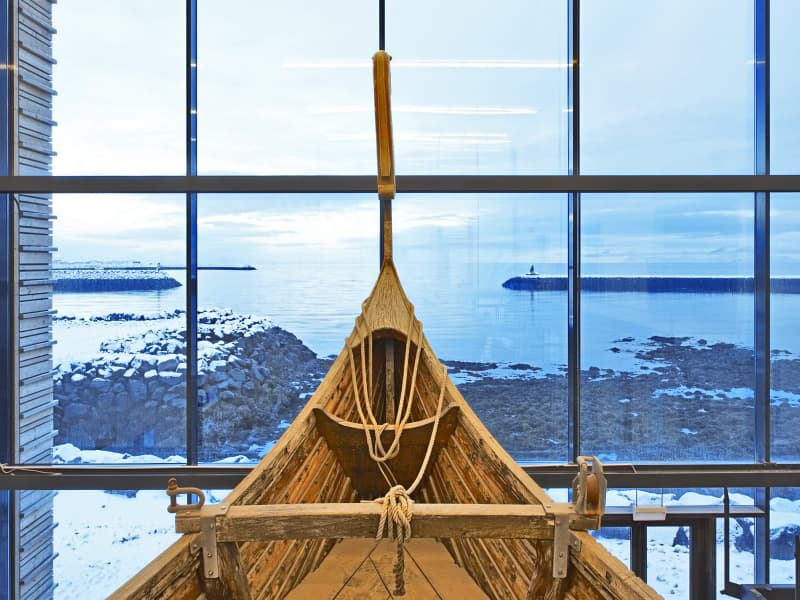
Viking World
Vikingaheimar is the home of the Viking Ship Íslendingur (the Icelander). Built in 1996, Icelander is an exact replica of the famous Gokstadship, a remarkable archaeological find of an almost completely intact Viking ship, excavated in Norway in 1882. Captain Gunnar Marel Eggertsson was inspired to build a replica of this beautiful ship based on his own background as shipbuilder and sailor. He copied the original nail for nail. In the year 2000, with a grant from the Leifur Eiríksson Commission of Iceland, he sailed from Iceland to New York, a journey of 4200 nautical miles. His voyage brought world-wide attention to Leif Eiriksson's and Bjarni Herjólfsson's discovery of America, dated, according to the Icelandic sagas, to exactly 1000 A.D. Building Icelander was an extraordinary achievement;at 23 metres long, 5.25 meters wide and with a holding capacity of 80 tons (by modern standards), it took 2 years of effort.The sail is 130 square meters and the mast is 18 meters in length. Made from pine and oak, scholars believe this was the most common type of ship in use during the Viking Age. Vikingaheimar is also a home to the exhibition The North Atlantic Viking Saga, originally shown at the Smithsonian Institution during the summer of 2000. Launched in Washington D.C. by King Hakon of Norway, and with a State Dinner at the White House, it then traveling to 6 other cities throughout North America. This exhibition, like the sailing of Icelander, celebrated the millennium anniversary of the Viking discovery of North America, shedding light on the latest scholarly research into the Norse settlement and explorations of unknown lands.Gunnar Marel and his crew of 8 left Iceland on Icelandic Independence day, the 17th of June, with a send off from the Prime Minister of Iceland. When it finally arrived in New York on October 5th-where it was greeted by First Lady Hillary Rodham Clinton and Mayor Rudolf Guiliani--the ship had made stops at 22 harbors. In addition to the festivities with kings, queens, presidents and mayors, when the ship arrived, visitors also streamed to see it while it was docked at each location, all told about 450,000 people came on board. These two fine projects, both celebrating Iceland's central role in the discovery of North America 1000 years ago by the Norse Vikings, have now found a permanent home in Vikinga Aldan (Viking Wave), the central building on the Vikingaheimar grounds. A spectacular modern building, it also offers beautiful views of the surrounding bay, Faxaflói.
These two fine projects, both celebrating Iceland's central role in the discovery of North America 1000 years ago by the Norse Vikings, have now found a permanent home in Vikinga Aldan (Viking Wave), the central building on the Vikingaheimar grounds. A spectacular modern building, it also offers beautiful views of the surrounding bay, Faxaflói.
View
Other (1)
| Photo gallery | Vogar | 190 Vogar | 440-6200 |